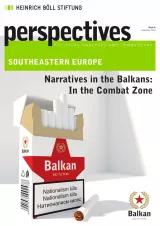
Twenty years on from the Kosovo War, the collective memory of both parties in the conflict remains burdened by myths and incontestable truths about what actually took place. The process of reconciliation and building longstanding peace is being undermined, primarily, by political elites in both countries, whose populist policies amplify the prejudices between Kosovar Albanians and Serbs. In this issue of Perspectives we aim to highlight the fact that Kosovo is not just a toponym, but a country burdened by its recent violent history, where common people are struggling to rebuild the broken societies that the conflict has left behind.
The “Strategy Group for a political, societal and economic European integration of the
Western Balkans Six” is a group of legal, historical and political researches from all WB6
countries organized by Heinrich Böll Stiftung’s Belgrade, Sarajevo and Berlin offices.
Its aim is to credibly advocate for a more effective European integration of the Balkans
in European as well as Balkan capitals.
In the region, patriarchal, homophobic and exclusive tendencies are dominating, shaping a climate of intolerance, of exclusion, of the radical negation of all things humane and rational. The consequences are rigid defence mechanisms against progressive and secular approaches. Instead of modernity, instead of establishing welfare for all, the citizens are kept in a perpetual combat zone, from which hundreds of thousands are fleeing – without war – in order to find their happiness in work and life elsewhere, beyond the continuing radicalisation.